Renewable Diesel
Proton Power’s diesel system uses our proprietary CHyP® pyrolysis units to make fuel directly from renewable feedstocks.
WE MAKE REAL DIESEL,
NOT BIODIESEL
Because of the high temperatures achieved by our CHyP® units, feedstocks are converted directly into a syngas that contains diesel molecules. We don’t use a Fischer-Tropsch process, fast pyrolysis bio-oil and upgrade, or hydrothermal treating processes – and no catalysts are required.
The resulting diesel fuel is the first cellulosic diesel fuel to be registered with the U.S. EPA as an R100 blend, and serves as a drop-in replacement for regular petroleum diesel.
![[DIESEL SYSTEM DIAGRAM]](https://protonpower.com/wp-content/uploads/2024/09/DIESEL-SYSTEM-DIAGRAM.png "[DIESEL SYSTEM DIAGRAM]")
REAL DIESEL, REAL BENEFITS
- Multiple products, multiple revenue streams
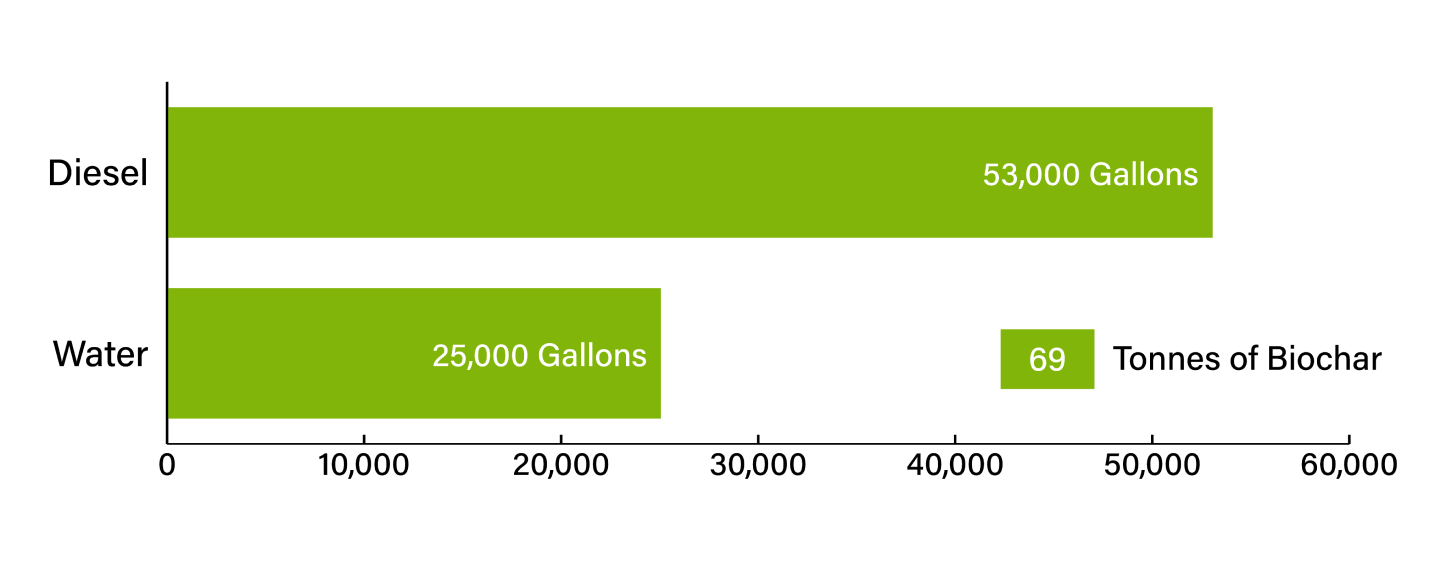
- Excellent diesel production yield: 100 gallons per dry metric tonne of biomass
- EPA registered drop-in R100 renewable diesel
- This isn’t biodiesel, which must be blended
- Registered per U.S. EPA 40 CFR Part 79 Fuel Registration
- First cellulosic renewable diesel fuel to be registered as R100
- Registered under section 4010 of U.S. IRS Code
- Eligible for D7 RINs in U.S.
- Meets ASTM D975 standards for No. 2-0D S15 diesel fuel (with the exception of conductivity)
- 100% biogenic (derived from biomass feedstock)
- Registered under the EU REACH Program
- EPA registered drop-in R100 renewable diesel
- Renewable Pro-C® Biochar
- Pro-C® Biochar can be upgraded to PPI Graphenes
- ProCess® Water
- Can be used as a plasticizing agent in concrete
- Improves flow and overall strength, while reducing permeability
- Reduces amount of water required
- Other agricultural applications include: growth enhancement, pest repellent, fungicide, increased disease resistance
- Can be used as a plasticizing agent in concrete
- Tail Gas
- Mix of primarily light hydrocarbons: H2, CO, CO2, CH4
- Energy content of 8.8 megajoules per cubic meter
- Applications include: heat source for feed stock drying, electricity generation, other industrial heat loads
- Excellent diesel production yield: 100 gallons per dry metric tonne of biomass
- Small footprint
- Able to locate next to feed stock source, avoiding expensive shipping for feed stocks
- Smallest system makes between 1.46 million gallons of renewable diesel per year
- Only 10,000 square feet (or 929 m2) needed for one module of PPI equipment
- Modular design makes for easy, reliable scale-up of capacity
- Sustainable
- PPI’s renewable diesel system is carbon negative compared to regular petroleum diesel
- 100% biogenic and made completely from renewable feed stocks
- No catalysts necessary
- Proven performance
- Over 12,000 hours of PPI operation
- Passed due diligence requirements of EPCs, investor consultants, and performance insurance companies
100
Gallons of Diesel Per Dry Metric Tonne of Feedstock
150
Kilograms of Pro-C®
Biochar Per Dry Metric Tonne of Feedstock
47
Gallons of ProCess® Water Per Dry Metric Tonne of Feedstock
349
Cubic Meters of Tail Gas Per Dry Metric Tonne
of Feedstock
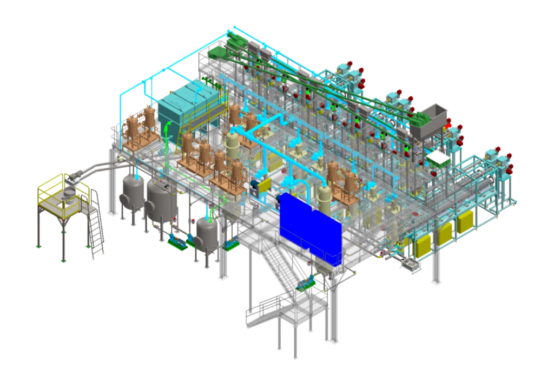
MODULE BUILDING
REQUIREMENTS
The recommended footprint for a single production module is 10,000 square feet (929 m2).
The height from floor to the top of the feed inlet is 30’-9”; however, a minimum roof height of forty feet is required (at-center, if the roof is gabled along the lateral axis) in order to accommodate the feedstock conveyor system.
Additional modules can be arranged side-by-side for footprint savings.
For design documentation, click here.
ROCKWOOD
OPERATING HISTORY
- One Module in Operation from June 2014
(data through September 2019)